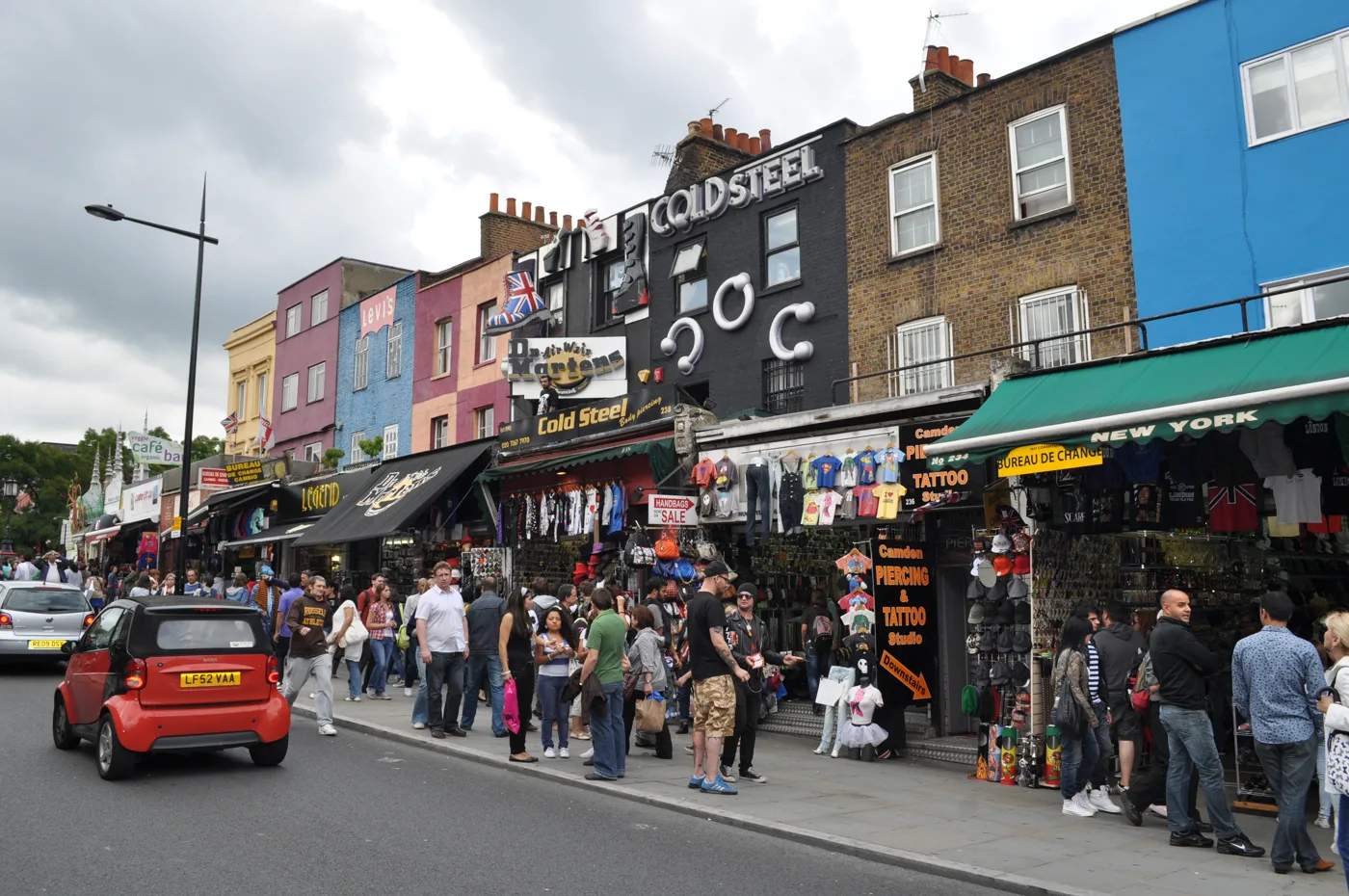

The traffic-free trial cut NO2 by 11.6 per cent and serious collisions to zero. Camden wants it permanent and extended. Consultation shuts 23 August.
Camden residents have until Sunday 23 August to say whether the traffic-free stretch of Camden High Street should be made permanent, and whether it should be pushed further north. The council’s Camden High Street permanent pedestrianisation consultation opened on 13 July and closes at the end of that Sunday.
This is the decision point on a scheme that has been running as a trial since May 2025, so the responses now carry more weight than the ones gathered while it was still an experiment.
What is actually being proposed
Two separate things are on the table, and it is worth separating them before responding.
Making the current arrangement permanent. Motor traffic is already excluded from Camden High Street between the junction with Parkway and Kentish Town Road, by Camden Town Underground station, and the junction with Jamestown Road and Hawley Crescent. Northbound cycling is allowed through it. Jamestown Road runs one way westbound for motor traffic, cycles excepted, from Camden High Street to Arlington Road.
Extending it. The council is asking separately about pushing the traffic-free section north from Hawley Crescent to the junction with Castlehaven Road, with two-way cycling, and about new pedestrianised sections on Jamestown Road and Hawley Crescent between Arlington Road and Stucley Place.
You can back one and reject the other. A response that supports keeping what exists but opposes the extension is a coherent answer, and the consultation is structured to record it.
What the trial data shows
The council has published monitoring from the trial period, and the numbers are more mixed than either side of the argument tends to suggest.
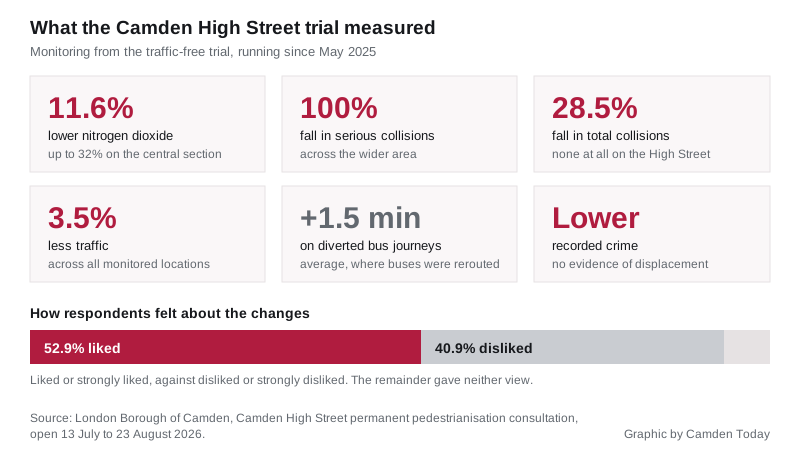
On air quality, the council records levels of nitrogen dioxide 11.6 per cent lower across the monitored area, and a reduction of as much as 32 per cent on the central High Street section itself.
On road safety, it records no road traffic collisions on Camden High Street during the trial, alongside a 28.5 per cent reduction in total collisions and a 100 per cent reduction in serious collisions across the wider area.
On traffic, the reduction was 3.5 per cent across all monitored locations, which is the figure that matters most to the objection that closing one street simply moves the cars onto the next one. A 3.5 per cent fall across the monitored area is not consistent with wholesale displacement, though it is a modest number and it is measured only at the points the council chose to monitor.
On buses, diverted journeys took about 1.5 minutes longer on average.
On crime, the council reports significantly lower recorded instances with no evidence of crime being displaced elsewhere.
Opinion is closer than the headline suggests
The survey response from the trial period splits 52.9 per cent who liked or strongly liked the changes against 40.9 per cent who disliked or strongly disliked them. That is a majority in favour, but a twelve point margin with a substantial minority actively opposed, which is not the same thing as settled public support.
That gap is the reason this consultation matters more than most. A scheme carried by twelve points can be moved by turnout, and consultation responses are self-selecting: whoever is more motivated to fill the form in is over-represented in it. If you have a view on this street, in either direction, the days before 23 August are when it counts.
What it means for you
If you want to respond, the survey is on the council’s consultation site. Camden also takes responses by phone on 0207 974 4444 and by email to safetravel@camden.gov.uk, which matters if you are not online or want to say more than the form allows.
If you drive or take a bus through Camden Town, the extension to Castlehaven Road would change the northbound route again, so it is worth reading the proposed extent rather than assuming this only affects the block by the station. Our page on Camden roadworks and travel tracks what is currently closed across the borough.
If you run a business on the affected stretch, deliveries and servicing arrangements are set by the traffic order rather than by the consultation result, so raise loading specifically in your response instead of only answering the yes or no question.
If you travel in by tube or bus, the diversion adds roughly a minute and a half to affected bus journeys on the council’s own monitoring. Our guide to Camden tube times and fares covers the alternatives from Camden Town station.
We will report the outcome when Camden publishes it. A consultation closing is not a decision: the responses go to the council with the monitoring data before any permanent traffic order is made.
Have your say